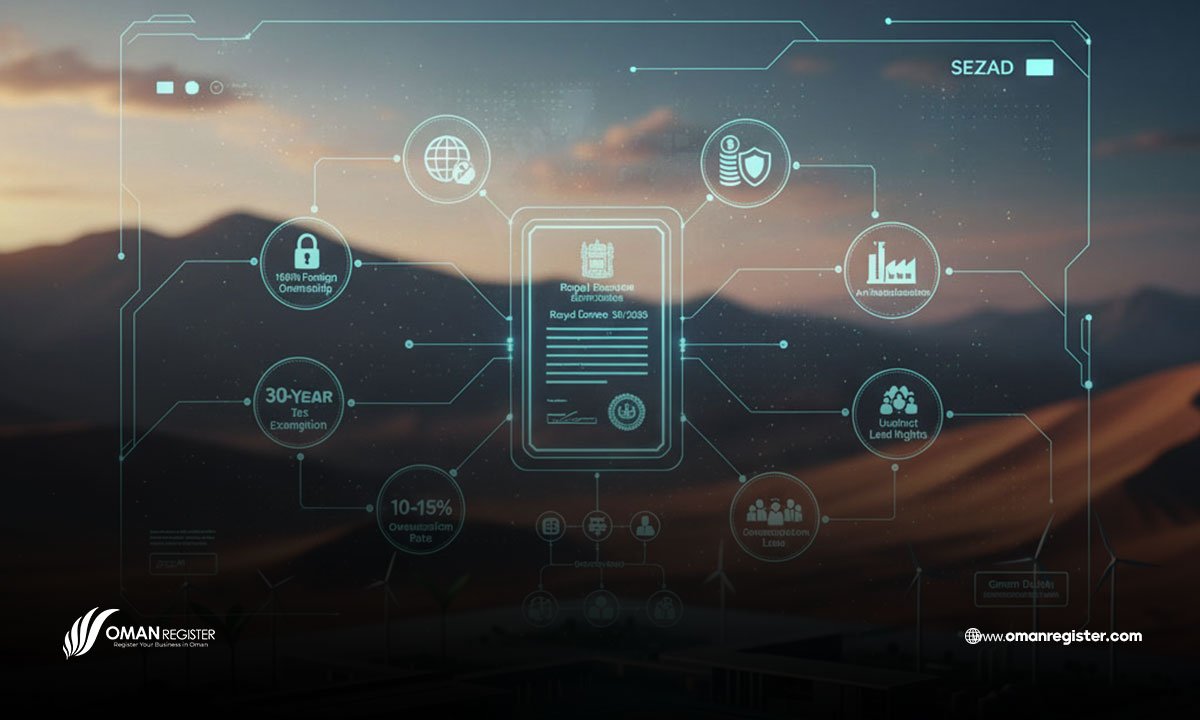
Investing in a foreign country requires, above all else, legal security. The Special Economic Zone at Duqm (SEZAD) is not just an industrial hub; it is an “independent legal territory” within the Sultanate of Oman. In April 2025, with the issuance of Royal Decree 38/2025, the laws governing Oman’s free and special zones were unified. Duqm, as a leader in these reforms, offers the most secure and facilitative legal environment for 2026. This article explores your legal rights, guarantees, and operational requirements.
Legal Structure and Governance in Duqm
Duqm is governed under the direct supervision of OPAZ (The Public Authority for Special Economic Zones and Free Zones). According to the new law, this authority has the “full power” to issue all permits, meaning you do not need to visit various ministries in Muscat.
1. Protection Against Nationalization
One of the most critical legal provisions in Duqm is the guarantee against property confiscation. According to Article 6 of the Free Zone Law, projects licensed in Duqm cannot be nationalized or have their assets seized, except by an explicit judicial ruling and the payment of “fair compensation” at current market value.
2. Administrative and Financial Independence
The Duqm zone possesses an independent legal personality. This means its internal regulations can be more flexible than mainland laws to maintain the zone’s global competitiveness.
Labor Law and Omanization Rates in Duqm (2026)
One of the most attractive aspects of Duqm’s laws for 2026 is the flexibility in hiring international specialists:
Omanization Rate of 10% to 15%
While companies in Muscat may be required to hire 30% to 50% local staff, companies based in Duqm are only required to maintain a rate of 10% to 15%. This law allows you to select the majority of your technical team from international experts.
One-Stop Visa Process
The issuance of labor visas in Duqm is supervised directly by the Zone Authority, bypassing the traditional, lengthy approval processes of the Ministry of Labor.
Tax and Customs Regime (Per Royal Decree 2025)
The new 2025 legislation has made tax incentives more transparent and sustainable:
- 30-Year Tax Holiday: Eligible companies are exempt from Corporate Income Tax for 30 years from the start of operations. This exemption is renewable for similar periods.
- Zero Personal Income Tax: No taxes are deducted from the salaries of employees (both Omani and expatriate).
- Permanent Customs Exemption: All equipment, machinery, and raw materials entering the Duqm zone are exempt from customs duties, provided they are used within the zone or re-exported.
Land Laws and Usufruct Agreements
In Duqm, you do not “buy” land; instead, you receive “Usufruct Rights” (Rights of Use):
- Contract Duration: Typically 25 to 50 years, which is renewable.
- Transfer Rights: With SEZAD approval, you can transfer your usufruct rights to another investor or use the land as collateral to obtain bank loans from Omani banks.
Environmental Laws and Sustainability (Green Duqm)
Given Duqm’s focus on Green Hydrogen in 2026, environmental laws have become stricter yet more transparent:
- EIA (Environmental Impact Assessment): Before starting any industrial project, submitting an assessment report is mandatory.
- Waste Management: Companies are required to comply with Oman’s national standards for industrial waste disposal.
Final Summary and Internal Links
The laws for company registration in Duqm in 2026 are designed to “eliminate investor risk.” 100% ownership, 30-year tax exemptions, and legal protection against nationalization make Duqm a secure base for global trade.
Related Content to Complete Your Information:
- To check the required budget, read our article: Company Registration Costs in Duqm Free Zone.
- To understand the administrative workflow, see our guide: Procedures and Documents for Company Registration in Duqm Free Zone.