- State visit
- 1–2 November 2026, Beijing — first by an Omani Sultan in 48 years
- Signed
- Currency swap (CBO–PBoC), 23 OIA agreements, 14 cooperation documents
- Bilateral trade 2025
- OMR 9.6 billion (exports OMR 7.7bn, imports OMR 1.9bn)
- Chinese FDI in Oman
- OMR 903.8 million by end of Q2 2026
- Next step
- Both sides pledged to speed up a China–GCC Free Trade Agreement
Oman and China have moved their economic relationship up a gear. During His Majesty Sultan Haitham bin Tarik's state visit to China on 1–2 November 2026 — the first by an Omani Sultan since diplomatic relations began 48 years ago — the two countries signed a local currency swap between the Central Bank of Oman and the People's Bank of China, 23 investment and partnership agreements led by the Oman Investment Authority (OIA), and 14 cooperation documents, and pledged to speed up a China–GCC Free Trade Agreement.
For business owners the message is clear: Oman wants more Chinese capital in manufacturing, logistics, renewable energy and technology, and the paperwork between the two countries is getting easier. This guide summarises what was signed, the numbers behind the relationship, and the practical routes a Chinese (or any Asian) investor can use to register a company in Oman and take part.
What was signed in Beijing
The Ministry of Foreign Affairs published a joint statement on 2 November 2026, and Gulf News, Times of Oman and Oman Observer reported the details of the signing day. The main outcomes were:
- Currency swap: a local currency swap agreement between the Central Bank of Oman and the People's Bank of China. Gulf News reported that its value, duration and terms were not disclosed.
- 23 OIA agreements: the Oman Investment Authority signed agreements, memoranda and strategic and investment partnerships with Chinese institutions and companies at the Oman–China Forum in Beijing. Oman Observer's coverage mentions a proposed fund equivalent to RO 307.6 million among them.
- 14 cooperation documents: covering green investment; science, technology and innovation; artificial intelligence; data and the digital economy; securities and futures regulation; central bank digital currencies; industrial investment and supply chains; outer space and the BeiDou navigation system; competition; environment; archives and media.
- Dates protocol: inspection and health requirements for Omani dried dates exported to China — a direct trade opening for Omani food producers.
- Banking links: Sohar International, the only Omani commercial bank taking part, signed three agreements with Shanghai Pudong Development Bank, E Fund Management (Hong Kong) and BOCHK Asset Management covering trade and supply-chain finance, cross-border settlement and project financing.
- Trade policy: both sides agreed to "expedite the conclusion" of a China–GCC Free Trade Agreement, and Oman joined a new international AI cooperation organisation as a founding member.
The numbers behind Oman–China business
China is Oman's largest trading partner, and the figures published around the visit show why the relationship matters for anyone setting up a trading, logistics or manufacturing company in Oman.
| Indicator | Figure | Source |
|---|---|---|
| Bilateral trade, 2025 | OMR 9.6 billion | MFA Oman (NCSI data) |
| Omani exports to China, 2025 | OMR 7.7 billion | MFA Oman |
| Omani imports from China, 2025 | OMR 1.9 billion | MFA Oman |
| Bilateral trade, Jan–Jul 2026 | about OMR 5.4 billion | MFA Oman |
| Chinese direct investment in Oman | OMR 903.8 million (end Q2 2026) | MFA Oman |
| Chinese tourist visits, H1 2026 | 48,000 (up more than 40%) | People's Daily via Oman Observer |
| Direct Beijing–Muscat flights | launched November 2025 | MFA Oman |
| Committed investment in OPAZ zones, 2025 | OMR 22.4 billion (+6.8%) | Arab News |
Two things stand out. First, trade is heavily weighted towards Omani exports, so there is a large gap in Chinese-made goods, components and services produced inside Oman — exactly what the industrial and supply-chain agreements target. Second, Chinese direct investment is still under OMR 1 billion, which leaves plenty of room for new entrants.
Where Chinese investors are already active
Recent projects show which locations and sectors are attracting Chinese capital:
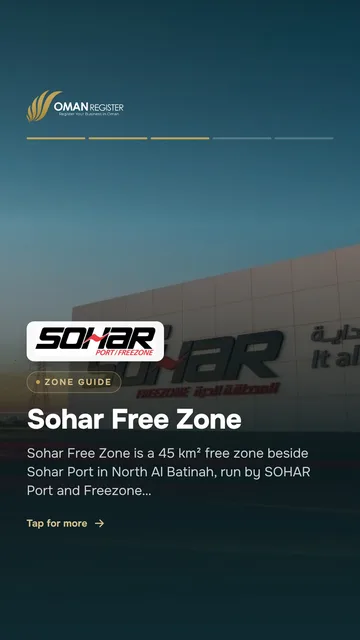
- Sohar Free Zone: Oman Observer reported in June 2026 that the Orion Solar project plans an integrated solar cell and module factory in Sohar Freezone worth about RO 220 million, with capacity of 6 GW of cells and 3 GW of panels a year. A Chinese investor quoted by the Ministry of Foreign Affairs set up his company in Sohar Free Zone in 2022, citing tax incentives and support from Invest Oman.
- Duqm Special Economic Zone: Arab News reported that Duqm SEZ announced USD 7.5 billion in investment commitments in June, including a USD 500 million battery-anode materials project backed by a Chinese company.
- Technology: XCyber, the international arm of China's QAX cybersecurity group, joined the OIA ecosystem with plans for local security operations centres and forensic labs.
- Logistics: the Ministry of Foreign Affairs says the two sides are exploring smart warehouses and distribution centres in the economic and free zones of Duqm, Sohar and Salalah.
The OCCI chairman named advanced manufacturing, renewable energy, AI, logistics and food security as priority sectors — a useful shortlist when choosing business activities for a new company.
How a Chinese investor can set up a company in Oman
The good news is that Oman's rules already allow full foreign ownership in most sectors. The choice is mainly about location and market.
| Route | Best for | Ownership | Key points |
|---|---|---|---|
| Mainland LLC | Selling in Oman, services, trading, government tenders | Up to 100% foreign (except reserved activities) | Registered with the Ministry of Commerce via Invest Easy; 15% corporate tax (3% for qualifying SMEs) |
| Free zone company (Sohar, Salalah, Duqm, etc.) | Export manufacturing, logistics, re-export to GCC, Africa and Asia | 100% foreign | Customs and tax incentives under RD 38/2025, including a 10-year exemption for new enterprises |
| Industrial city (Madayn) | Factories serving the local and GCC market | 100% foreign | Ready plots and utilities; licensing through Madayn |
| Branch of a Chinese company | Contract-based projects | Owned by parent | Usually linked to a specific contract with a government or major client |
Practical steps:
- Choose the activity and location. Check that your activity is not on the list of 123 activities reserved for Omanis, and decide between mainland, a free zone or an industrial city.
- Choose the legal form. Most foreign investors use a limited liability company (LLC); a single owner can use a sole proprietor company (SPC). See all company types.
- Prepare documents. Passports of shareholders and managers; for a corporate shareholder, the Chinese business licence, articles of association and board resolution — notarised in China, legalised and translated into Arabic.
- Register and license. Reserve the trade name, issue the Commercial Registration, register with the Chamber of Commerce, and obtain any sector licences and the municipal permit.
- Bank, tax and staff. Open a corporate bank account, register with the Oman Tax Authority (and for VAT at 5% if you pass the threshold), and apply for work visas within your Omanisation quota.
Timelines depend on the activity and the authorities; simple trading companies on the mainland are typically far faster than projects needing environmental or industrial approvals.
What the currency swap and FTA talks could change
The currency swap does not change company registration rules, but it supports settlement in local currencies and signals deeper financial cooperation. Combined with the digital payments and cross-border settlement agreements signed by Omani and Chinese banks, Chinese importers and exporters can expect more banking options for RMB-linked trade over time. Until the operational terms are published, companies should keep using normal USD/OMR banking and ask their bank what RMB services are available.
A China–GCC Free Trade Agreement has been under negotiation for years; the joint statement only commits to speeding it up. If concluded, it could lower tariffs between China and all six Gulf states, which would make Oman-based manufacturing with GCC market access even more attractive. It is a reason to plan, not yet a reason to rely on lower tariffs.
Residency for Chinese investors and their families
Owning an Omani company gives a route to an investor residence card, and family members can usually be sponsored once the investor is resident. Larger investors can apply for Oman's Golden Residency, which starts from OMR 200,000 and gives 10-year residency through seven investment routes. With direct Beijing–Muscat flights now operating, managing an Omani company from China and visiting regularly is far simpler than before.
Common mistakes to avoid
- Assuming every activity is open. Check the reserved list and sector licensing before signing a lease or ordering machinery.
- Unlegalised documents. Chinese corporate documents must be notarised, legalised and translated; missing steps are the most common cause of delay.
- Choosing the wrong zone. A free zone company selling mainly in Oman may pay customs duty on goods entering the mainland; match the location to your market.
- Ignoring tax holidays' conditions. Free zone exemptions have conditions and, for very large groups, may interact with Oman's 15% minimum top-up tax.
- Underestimating Omanisation. Each sector has Omani hiring targets that affect how many expatriate visas you can obtain.
How Oman Register can help
Oman Register helps Chinese and international investors choose the right structure, prepare and legalise documents, register the company, open a bank account and obtain visas — on the mainland, in free zones and in industrial cities. Final approvals are always decided by the competent authorities, but a well-prepared file saves weeks.
Call or WhatsApp +968 7733 3556, email info@omanregister.com, or contact us to discuss your project.
Frequently asked questions
What did Oman and China sign during the November 2026 state visit?
According to Gulf News, the Central Bank of Oman and the People's Bank of China signed a local currency swap agreement, the Oman Investment Authority signed 23 agreements, memoranda and strategic and investment partnerships with Chinese institutions and companies, and the two governments signed 14 cooperation documents covering areas such as green investment, AI, the digital economy, digital currencies, industrial supply chains and BeiDou satellite navigation.
How big is the currency swap between Oman and China?
It has not been published. Gulf News reported that the value, duration and operational terms of the swap were not disclosed. The joint statement only confirms that a local currency swap agreement was signed.
Can a Chinese investor own 100% of a company in Oman?
In most activities, yes. Under the Foreign Capital Investment Law (Royal Decree 50/2019), foreign investors can own an Omani company outright, except in activities on the list reserved for Omanis (123 activities on the 2024 list) and a few regulated sectors. Free zones and special economic zones also allow full foreign ownership. The competent authority decides each application.
Which is better for a Chinese manufacturer: mainland Oman or a free zone?
It depends on the market. Free zones such as Sohar, Salalah and Duqm suit export-focused factories and logistics, with customs and tax incentives under Royal Decree 38/2025. A mainland company suits businesses that mainly sell inside Oman or bid for government contracts. Many groups use both.
Is there a direct flight between China and Oman?
Yes. Oman's Ministry of Foreign Affairs says direct Beijing–Muscat flights were launched in November 2025.
Do Chinese investors get residency in Oman?
A company owner can obtain an investor residence card through their Omani company, and larger investors can apply for Oman's Golden Residency, which starts from an investment of OMR 200,000 and gives 10-year residency. Approval is decided by the authorities.
Sources & official references
- Ministry of Foreign Affairs of Oman — Joint statement from Oman and China (2 Nov 2026)
- Ministry of Foreign Affairs of Oman — Oman and China: a growing economic partnership (31 Oct 2026)
- Gulf News — Oman and China sign currency swap deal, 23 investment agreements during Sultan Haitham's visit (2 Nov 2026)
- Times of Oman — Oman-China joint communique reaffirms commitment to strengthening strategic partnership (2 Nov 2026)
- Oman Observer — Oman and China sign deals worth billions (2 Nov 2026)
- Oman Observer — China–Oman cooperation opens a new chapter (3 Nov 2026)
- Arab News — Oman, China explore investment partnerships across economic zones (7 Sep 2026)
- Oman Observer — Chinese firms back Oman's solar, cyber ambitions (13 Jun 2026)
This guide is general information, checked against official sources at the date shown. Rules and fees in Oman change; we confirm the current requirements for your case before you apply.

Need help setting up in Oman?
Tell us what you plan to do. We will recommend the right location and company type, list the documents and quote the full cost before you start.
Related guides

Oman Signs OMR 304m in Zone Deals: What It Means for Investors
On 28 October 2026 Oman signed 28 investment agreements worth more than OMR 304 million across its industrial cities, free zones and the Duqm SEZ. Here is where the money went, which sectors are winning, and what it means if you plan to set up in one of these zones.

Why Sohar Free Zone Is a Top Investment Destination in Oman
An investor's look at why Sohar Freezone is one of Oman's leading investment locations: port connectivity, incentives, sectors, realistic limitations and who it suits best.

Investment Opportunities in Oman Free Zones: Strategic Roadmap
A roadmap to investment opportunities in Oman's free zones and special economic zones: which sectors each zone targets, the incentives under the new zones law, and how to choose and enter.